
English Fun for Kids in Chile: Cartoons, Candy, Books, and School Words
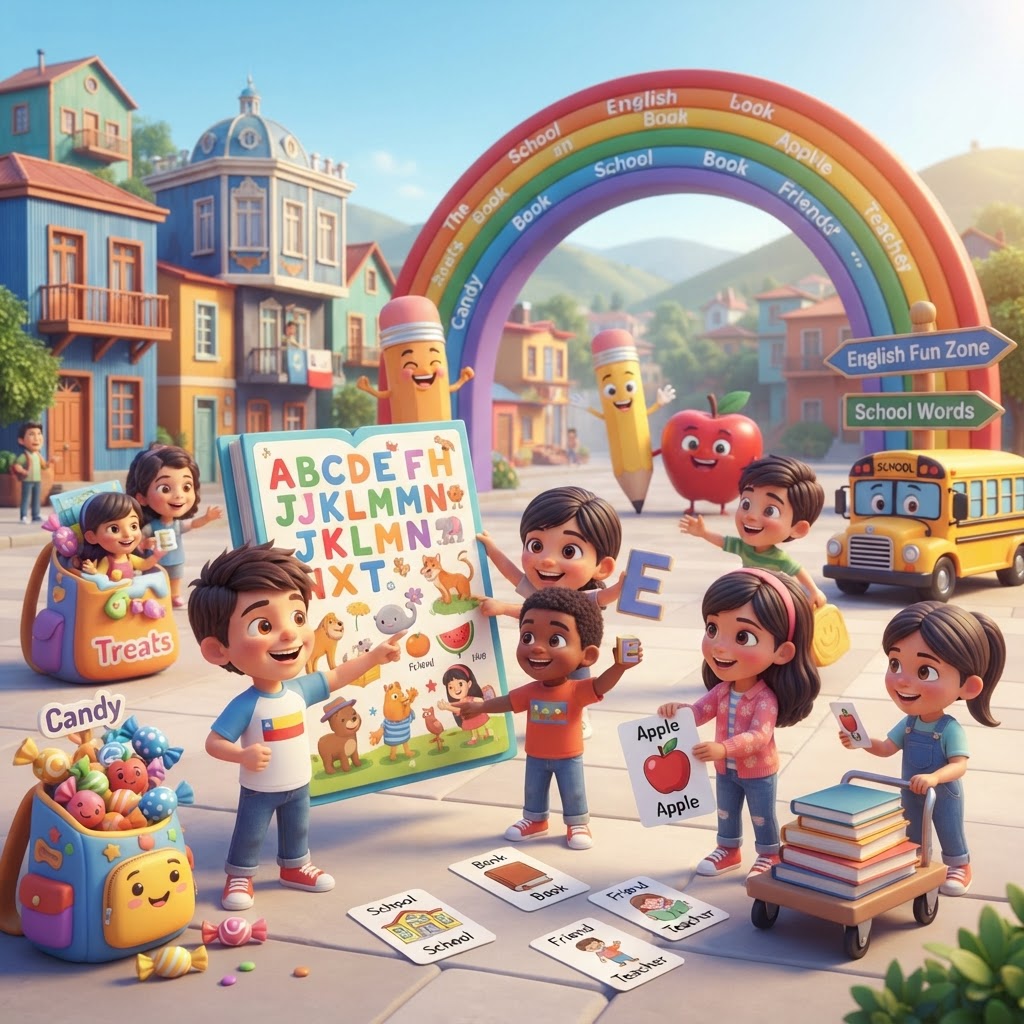
Hi, friends! Welcome to today’s English fun time. Let’s learn English with things many kids in Chile know and love: cartoons, toys, sweet snacks, books, music, hobbies, and school words. Read slowly, smile, and try to say the new words out loud. You can do it!
Ready? Let’s go on a bright English adventure together.
Cartoons Kids Are Watching in Chile
Many kids in Chile enjoy funny, exciting, and colorful cartoons. Some popular shows children often talk about are Bluey, Pokémon Horizons, Miraculous, SpongeBob SquarePants, and The Amazing World of Gumball. These shows have jokes, action, friendship, and big feelings.
When you watch a cartoon in English, listen for simple words like friend, family, run, jump, and happy. Cartoons are a fun way to train your ears.
Toys & Collectibles
Kids also love cool things to play with and collect. In Chile, many children enjoy trading cards, plush toys, mini figures, building sets, slime kits, fidget toys, and board games. Card collections and surprise mini toys can be very exciting because you never know what you will get.
You can practice English with toys too. Try sentences like: This is my toy. These are my cards. I have a blue plush bear.
Sweet Treats & Candies
Chile has many sweet snacks that children recognize. Some famous treats are Super 8, Frugelé, Chokita, gomitas, alfajores, and cookies with manjar. Sweet treats can be fun for a special moment with family or friends.
In English, you can say: I like chocolate. My favorite candy is fruity. Remember: sweets are best sometimes, not all the time. Drink water and brush your teeth.
Books & Stories
Books open magic doors. Many readers from ages 8 to 13 enjoy Papelucho, Dog Man, Diary of a Wimpy Kid, Matilda, and adventure stories like Percy Jackson. Some kids like comics, some like mysteries, and some like silly stories that make them laugh.
If you read a little English every day, even one page, your vocabulary can grow. Try reading the title, the pictures, and a few easy sentences first.
Music & Dance
Music makes English fun. Many children enjoy animated movie songs, children’s choirs, clean pop songs, kid-safe K-pop dance practice, and school cueca activities. Dancing helps you remember rhythm and words.
Try easy music words: song, dance, sing, beat, and clap. You can say: I can dance. I can sing with my friends.
Hobbies & After-School Fun
After school, many kids in Chile enjoy football, basketball, biking, skating, swimming, drawing, crafts, baking, robotics clubs, and video games with family rules. Some children like collecting stickers, growing plants, or making friendship bracelets.
Hobbies are great for English practice. You can say: I play football. I draw comics. I ride my bike. My hobby is painting.
School Subjects Vocabulary
Here are some useful school words in English. Read them and try the example sentences.
- Math — matemáticas — Math is fun when I solve puzzles.
- Science — ciencias — In science, we learn about plants and animals.
- History — historia — History tells us about people from long ago.
- Art — arte — I paint a bright picture in art class.
- Music — música — We sing a happy song in music.
- Physical Education (PE) — educación física — In PE, we run, jump, and stretch.
- Homework — tarea — I do my homework after my snack.
- Library — biblioteca — The library is quiet and full of stories.
Grammar Power-Up
1. I like + sustantivo o verbo con -ing
En inglés, usamos I like para decir lo que nos gusta. Después puede venir un sustantivo o una actividad terminada en -ing.
I like books. = Me gustan los libros.
I like reading after school. = Me gusta leer después de clases.
2. There is / There are
Usamos There is para una cosa y There are para varias cosas. Sirve para decir lo que hay.
There is one book on the desk. = Hay un libro sobre el escritorio.
There are three candies in the bag. = Hay tres dulces en la bolsa.
Quick Quiz
Which sweet treat was named in the blog?
- A. Super 8
- B. Tomato soup
- C. Carrot salad
Which book is by a Chilean author?
- A. Matilda
- B. Papelucho
- C. Percy Jackson
What do we use for many things: one or more than one?
- A. There is
- B. There are
- C. I like
Great job reading in English today!
School & Pop Vocabulary
| English | Español | Example |
|---|---|---|
| Math | matemáticas | Math is fun when I solve puzzles. |
| Science | ciencias | In science, we learn about plants and animals. |
| History | historia | History tells us about people from long ago. |
| Art | arte | I paint a bright picture in art class. |
| Music | música | We sing a happy song in music. |
| Physical Education (PE) | educación física | In PE, we run, jump, and stretch. |
| Homework | tarea | I do my homework after my snack. |
| Library | biblioteca | The library is quiet and full of stories. |
Grammar Power-Up
I like + noun / verb-ing
Usamos "I like" para hablar de gustos. Después puede venir un sustantivo (book, music) o un verbo con -ing para una actividad (reading, dancing).
🇬🇧 I like reading after school.
🇨🇱 Me gusta leer después de clases.
There is / There are
Usamos "There is" para una sola cosa y "There are" para dos o más cosas. Sirve para decir lo que hay en un lugar.
🇬🇧 There are three candies in the bag.
🇨🇱 Hay tres dulces en la bolsa.
Quick Quiz
1. Which sweet treat was named in the blog?
2. Which book is by a Chilean author?
3. What do we use for many things?