
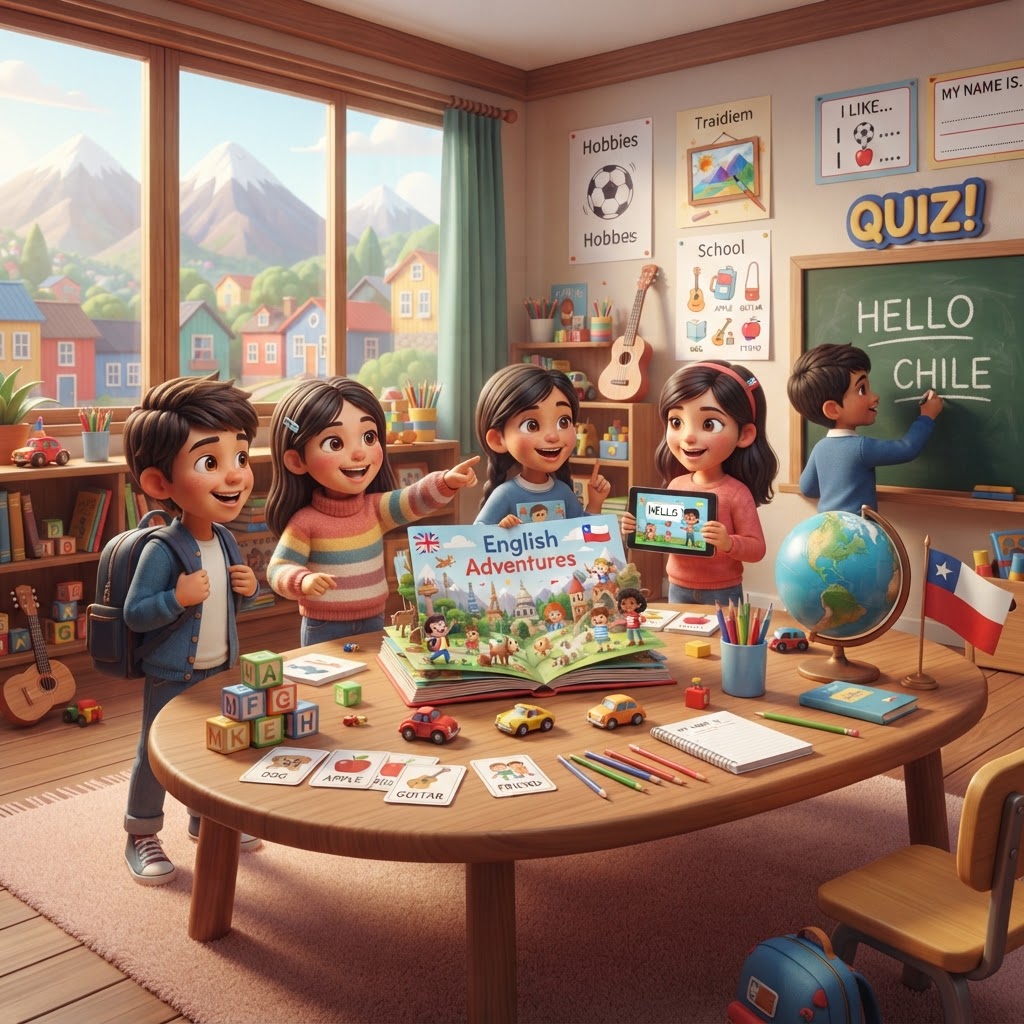
Hi, super students! Today we will learn English with fun ideas from life in Chile. It is winter in August, so this is a great day for cozy reading, music, games, and new words. Ready? Let’s jump into English together and have a bright, happy day!
Cartoons Kids Are Watching in Chile
Many kids in Chile enjoy funny and exciting cartoons from TV and streaming. Bluey is loved for its family games and big imagination. Pokémon is still popular because kids like adventure, teamwork, and cool creatures. SpongeBob SquarePants makes many children laugh with silly sea stories. Teen Titans Go! is another fun choice for superhero jokes and action. Cartoons are great for English practice because you can hear simple words, short conversations, and everyday expressions.
Tip: Watch with English audio and Spanish subtitles for a few minutes. Listen for words like friend, fun, run, and help.
Toys & Collectibles
Kids also love building, collecting, and playing. LEGO-style building sets are popular because children can create houses, cars, animals, and fantasy worlds. Pokémon cards and other trading cards are exciting for friendly collecting and trading. Plush toys are soft, cute, and great for room decoration. Hot Wheels-style cars, board games, and puzzle games are fun for rainy afternoons. Many kids in Chile also enjoy creative toys like slime kits, beads, and drawing sets.
English words to remember: build, collect, trade, play, and share.
Sweet Treats & Candies
Chile has many famous sweet treats. Kids often know snacks like Súper 8, Chokita, Frugelé, Tritón, and chewy candies from Ambrosoli. Some are crunchy, some are chocolatey, and some are fruity. These snacks can be fun to talk about in English.
Try these words: sweet, crunchy, chewy, chocolate, and strawberry. Example: “This candy is sweet and chewy.” Remember: treats are best in small amounts, and don’t forget to brush your teeth!
Books & Stories
Books can open magic doors! Many children enjoy funny and adventurous books like Dog Man, Diary of a Wimpy Kid, and illustrated myth or animal story collections. Some kids also like mystery stories, comics, and short chapter books in English. Reading a little every day helps you learn new words and understand sentences better.
A good reading trick is this: read one short page, circle or write one new English word, and say it out loud. Stories are not only fun—they make your English stronger step by step.
Music & Dance
Music makes English feel alive! Kids in Chile often enjoy cheerful pop, animated movie songs, dance practice songs, and fun family-friendly classics like music from 31 Minutos. Some children like learning simple dance moves from clean pop songs or trying K-pop-style choreography with friends. At school, music can also connect with Chilean traditions, rhythm games, and celebrations.
Listen for easy words in songs such as hello, dance, happy, together, and sing. Singing in English helps with pronunciation and confidence.
Hobbies & After-School Fun
After school, many kids in Chile enjoy football, basketball, biking, skating, drawing, crafts, video games, and music practice. In winter, indoor hobbies can be extra fun: reading, building models, painting, baking with family, or doing science experiments at home. Outdoor fun is great too when the weather is nice—walking, playing in the park, or practicing a sport with friends.
Hobbies help you relax, learn, and make friends. In English you can say: “My hobby is drawing,” or “I like playing football after school.”
School Subjects Vocabulary
Here are useful school words in English:
- Math = Matemáticas. Example: “Math is my favorite subject.”
- Science = Ciencias. Example: “In science, we learn about plants.”
- History = Historia. Example: “History tells us about the past.”
- Art = Arte. Example: “I draw animals in art class.”
- Music = Música. Example: “We sing a song in music.”
- Physical Education = Educación Física. Example: “We run and jump in Physical Education.”
- Reading = Lectura. Example: “Reading helps me learn new words.”
- English = Inglés. Example: “In English, I can say hello!”
Grammar Power-Up
1. I like / I love + sustantivo o verbo con -ing
Usamos I like para decir que algo nos gusta. Usamos I love para decir que nos gusta mucho más. Después podemos usar un sustantivo o un verbo terminado en -ing.
Ejemplos:
English: “I like science.”
Español: “Me gusta ciencias.”
English: “I love reading.”
Español: “Me encanta leer.”
2. There is / There are
There is se usa para una sola cosa. There are se usa para dos o más cosas.
Ejemplos:
English: “There is a book on the desk.”
Español: “Hay un libro sobre el escritorio.”
English: “There are three candies in the bag.”
Español: “Hay tres dulces en la bolsa.”
Quick Quiz
- Which cartoon is famous for family games and imagination?
- What is the English word for Ciencias?
- Which grammar form do we use for one thing: There is or There are?
Great job! You are growing your English every day.
School & Pop Vocabulary
| English | Español | Example |
|---|---|---|
| Math | Matemáticas | Math is my favorite subject. |
| Science | Ciencias | In science, we learn about plants. |
| History | Historia | History tells us about the past. |
| Art | Arte | I draw animals in art class. |
| Music | Música | We sing a song in music. |
| Physical Education | Educación Física | We run and jump in Physical Education. |
| Reading | Lectura | Reading helps me learn new words. |
| English | Inglés | In English, I can say hello! |
Grammar Power-Up
I like / I love + noun or verb ending in -ing
Usamos "I like" para decir que algo nos gusta. Usamos "I love" para decir que nos gusta mucho más. Después puede venir un sustantivo o un verbo con terminación -ing.
🇬🇧 I love reading.
🇨🇱 Me encanta leer.
There is / There are
"There is" se usa para una sola cosa. "There are" se usa para dos o más cosas.
🇬🇧 There are three candies in the bag.
🇨🇱 Hay tres dulces en la bolsa.
Quick Quiz
1. Which cartoon is known in the post for family games and imagination?
2. What is the English word for "Ciencias"?
3. Which form do we use for one thing?