
English Fun for Chilean Kids: Cartoons, Candy, and School Words!
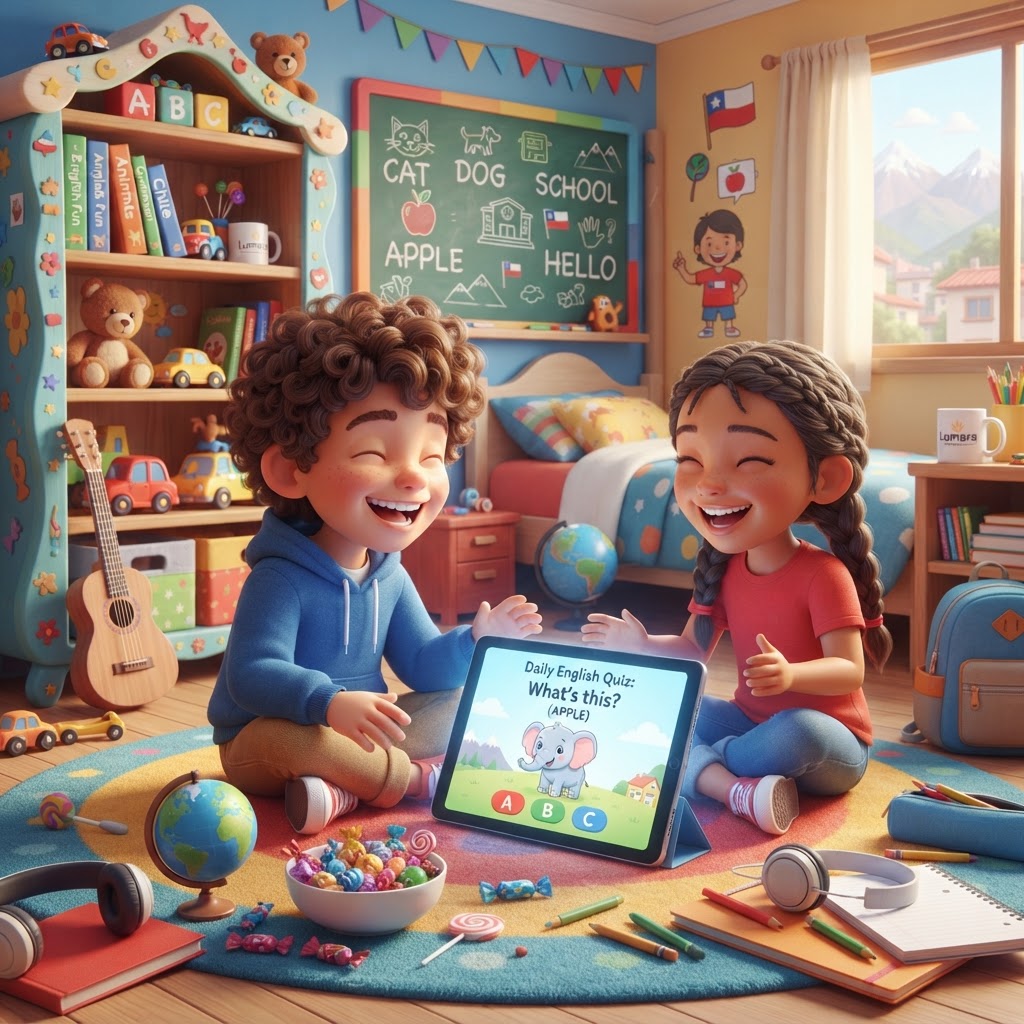
Hello, English Explorers in Chile!
Today is August 23, 2026.
Hi, friends! Are you ready for a fun English adventure? Today we will talk about cartoons, toys, sweet treats, books, music, hobbies, school words, and a little grammar. Read slowly, smile, and learn one step at a time. You are doing great!
## Cartoons Kids Are Watching in Chile
Many kids in Chile enjoy funny and exciting cartoons on TV and streaming. Shows with silly jokes, teamwork, pets, heroes, and adventures are very popular. Some favorites that many children know are Bluey, SpongeBob SquarePants, Pokémon, and The Amazing World of Gumball. Cartoons can help you hear easy English words like friend, run, happy, and team.
- Bluey: family fun and imagination
- SpongeBob: silly jokes and sea adventures
- Pokémon: training, teamwork, and discovery
- Gumball: funny surprises and wild ideas
Tip: Try watching a short scene in English and listen for one new word.
## Toys & Collectibles
Kids also love toys that let them build, trade, solve, and play with friends. Building bricks, plush toys, trading cards, board games, puzzle cubes, and craft kits are still big favorites. Collecting cards and swapping with friends can be fun when everyone plays fairly and keeps cards safe.
- Building sets for making houses, cars, and robots
- Trading cards for collecting and friendly games
- Plush toys for cozy fun
- Board games for family time
- Slime and craft kits for creative afternoons
English words to remember: build, collect, trade, play.
## Sweet Treats & Candies
Chile has many sweet treats that children know and enjoy. Some popular snacks are Super 8, Frugelé, Tritón, and Chocman. Crunchy wafers, chewy fruit candies, cookies, and chocolate cakes can make snack time feel special.
A smart snack idea is balance: enjoy sweets sometimes, and remember water, fruit, and healthy foods too.
- Super 8: a chocolate wafer bar
- Frugelé: soft fruity candy
- Tritón: sandwich cookies
- Chocman: a chocolate cake snack
English words to learn: sweet, cookie, chocolate, share.
## Books & Stories
Reading is a great way to grow your English. Many kids enjoy books with humor, action, and big imagination. Popular age-appropriate choices include Dog Man, Diary of a Wimpy Kid, Percy Jackson, and The Wild Robot. Graphic novels and illustrated chapter books are wonderful because the pictures help you understand the story.
- Funny books make reading feel easy
- Adventure books help you learn new words
- Series books are great when you want more stories
Try this: read one page in English and circle three words you know.
## Music & Dance
Music makes English fun! Many children enjoy cheerful pop songs, movie soundtracks, dance challenges, and family-friendly K-pop practice videos. In Chile, kids may also dance at school events, family parties, and celebrations. Dancing helps you remember words with rhythm.
- Sing simple choruses in English
- Practice clean dance moves with friends
- Clap the beat and repeat new words
You can learn words like song, dance, beat, and voice.
## Hobbies & After-School Fun
After school, many kids in Chile enjoy football, basketball, drawing, crafts, skating, bike riding, reading clubs, and robotics. Some children make friendship bracelets, paint mini figures, or learn dance steps. Hobbies help you relax, make friends, and learn new skills.
- Football and basketball build teamwork
- Drawing and crafts grow creativity
- Robotics and puzzles train the brain
- Skating is fun when you wear safety gear
English words to practice: hobby, team, draw, create.
## School Subjects Vocabulary
Here are some useful school subject words in English. Read them aloud and try the example sentences.
Math = Matemáticas. Example: Math is fun when I solve number puzzles.
Science = Ciencias. Example: In Science, we learn about plants and planets.
History = Historia. Example: History tells us stories about people from the past.
Geography = Geografía. Example: In Geography, we study maps and countries.
Art = Arte. Example: I use many colors in Art class.
Music = Música. Example: We sing a happy song in Music.
Physical Education = Educación física. Example: In Physical Education, we run and jump.
Language = Lenguaje. Example: Language class helps me read and write better.
## Grammar Power-Up
1. I like / He likes
Usamos like para decir lo que nos gusta. Con I, you, we, they usamos like. Con he, she, it agregamos -s: likes.
English: I like books. She likes music.
Español: Me gustan los libros. A ella le gusta la música.
2. There is / There are
Usamos There is para una sola cosa y There are para dos o más. Sirve para decir qué hay en un lugar.
English: There is a book on the desk. There are three pencils in the bag.
Español: Hay un libro en el escritorio. Hay tres lápices en la mochila.
## Quick Quiz
- Which sweet treat from Chile is named in this post?
A) Super 8 B) Pizza C) Salad - What is the Spanish word for Art?
A) Historia B) Arte C) Música - What fun activity is mentioned in the Music & Dance section?
A) K-pop dance practice B) Fixing cars C) Sleeping in class
Great job reading in English today. Come back tomorrow for more fun!
School & Pop Vocabulary
| English | Español | Example |
|---|---|---|
| Math | Matemáticas | Math is fun when I solve number puzzles. |
| Science | Ciencias | In Science, we learn about plants and planets. |
| History | Historia | History tells us stories about people from the past. |
| Geography | Geografía | In Geography, we study maps and countries. |
| Art | Arte | I use many colors in Art class. |
| Music | Música | We sing a happy song in Music. |
| Physical Education | Educación física | In Physical Education, we run and jump. |
| Language | Lenguaje | Language class helps me read and write better. |
Grammar Power-Up
I like / He likes
Usamos "like" para decir lo que nos gusta. Con "I, you, we, they" usamos "like". Con "he, she, it" agregamos "-s": "likes".
🇬🇧 I like books. She likes music.
🇨🇱 Me gustan los libros. A ella le gusta la música.
There is / There are
Usamos "There is" para una sola cosa y "There are" para dos o más. Sirve para decir qué hay en un lugar.
🇬🇧 There is a book on the desk. There are three pencils in the bag.
🇨🇱 Hay un libro en el escritorio. Hay tres lápices en la mochila.
Quick Quiz
1. Which sweet treat from Chile is named in the post?
2. What is the Spanish word for "Art"?
3. What fun activity is mentioned in the Music & Dance section?