
Hello, English Explorers!
Today is Wednesday, September 9, 2026. Are you ready for a colorful English adventure? We will chat about cartoons, toys, Chilean treats, books, music, hobbies and school. Read aloud, learn new words and have fun!
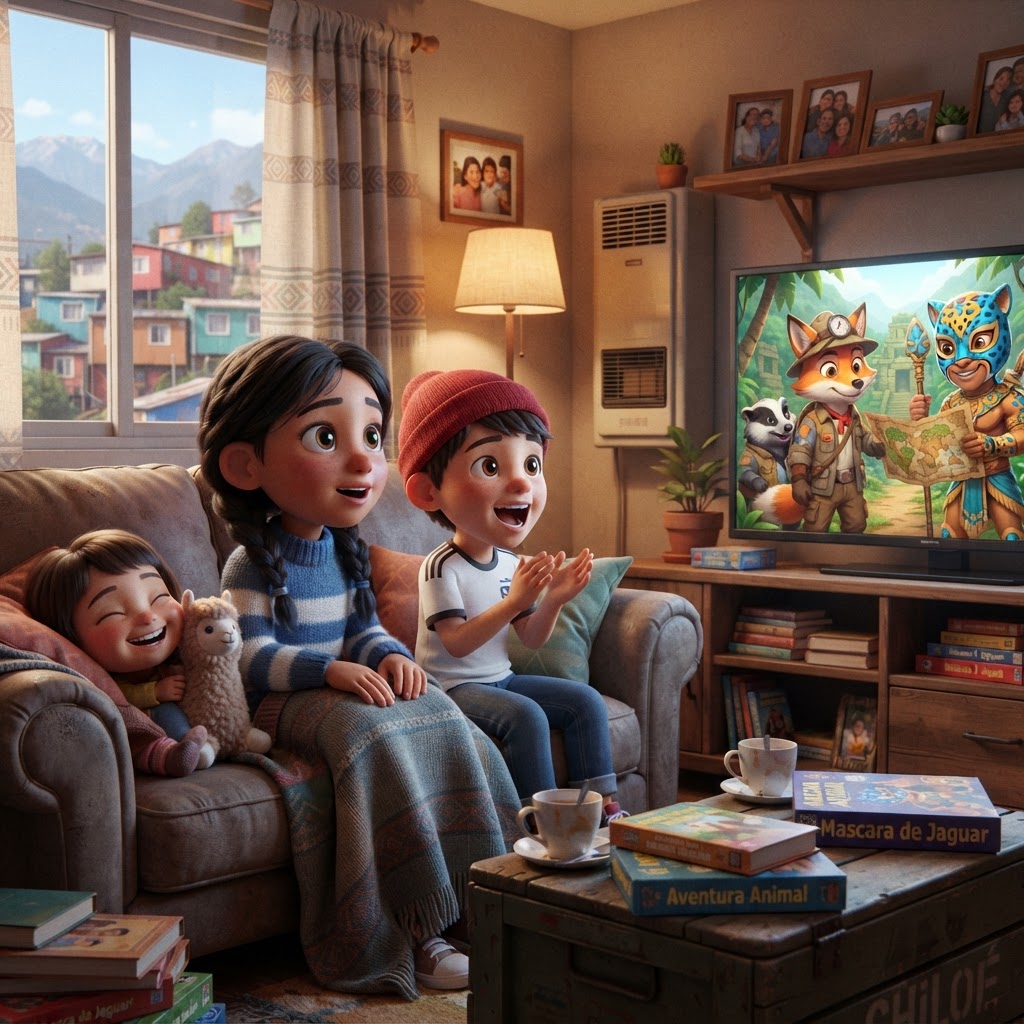
Cartoons Kids Are Watching in Chile
Many children in Chile enjoy animated adventures on TV and streaming services. Bluey tells warm and funny stories about a playful dog family. Miraculous: Tales of Ladybug & Cat Noir has superheroes, teamwork and mysteries. Pokémon adventures are also popular because they feature friendship, exploration and amazing creatures.
Try this sentence: “My favorite cartoon character is funny and brave.”
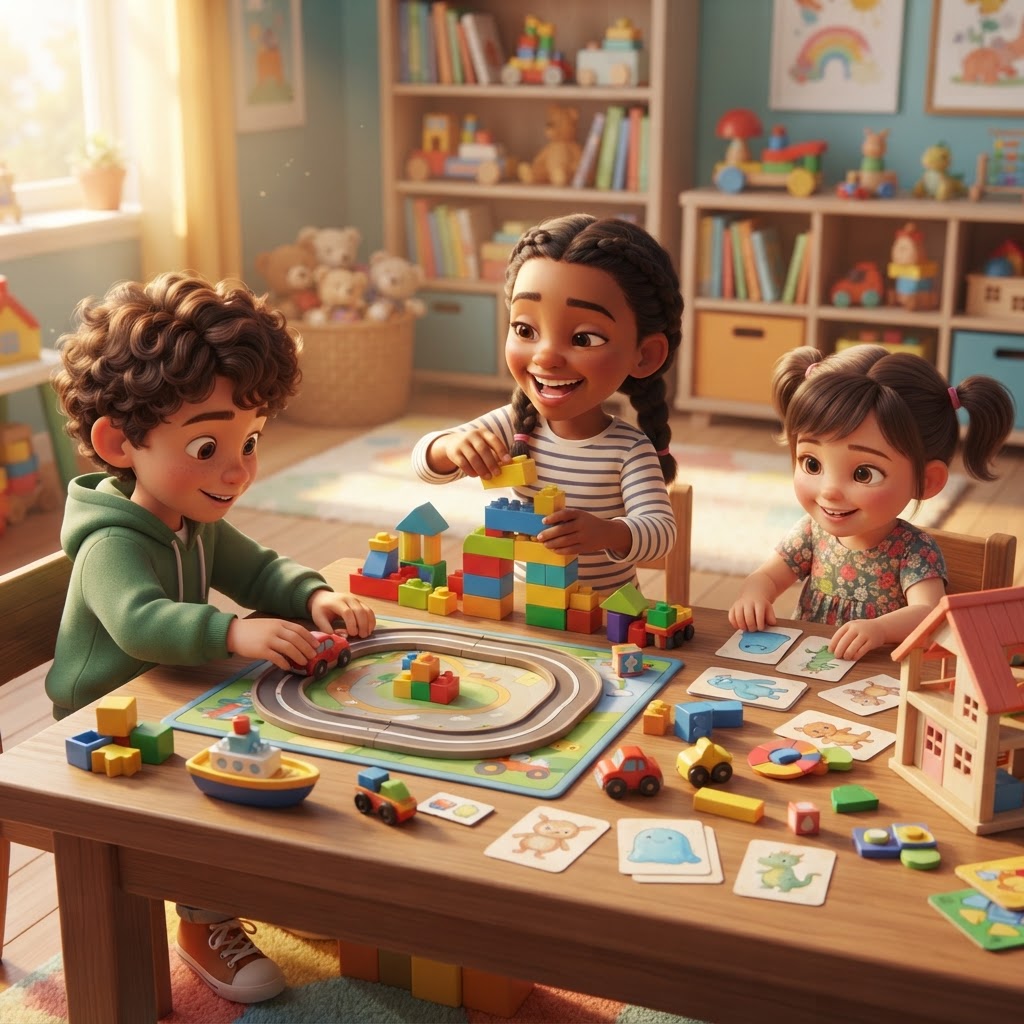
Toys & Collectibles
Building bricks, dolls, small cars and board games are great for creative play. Trading cards and cute mini figures are exciting to collect and swap. Some children also enjoy Pokémon cards, LEGO-style building sets and surprise collectibles. Remember to trade fairly and ask an adult before buying anything.
Try this sentence: “I keep my collection in a blue box.”
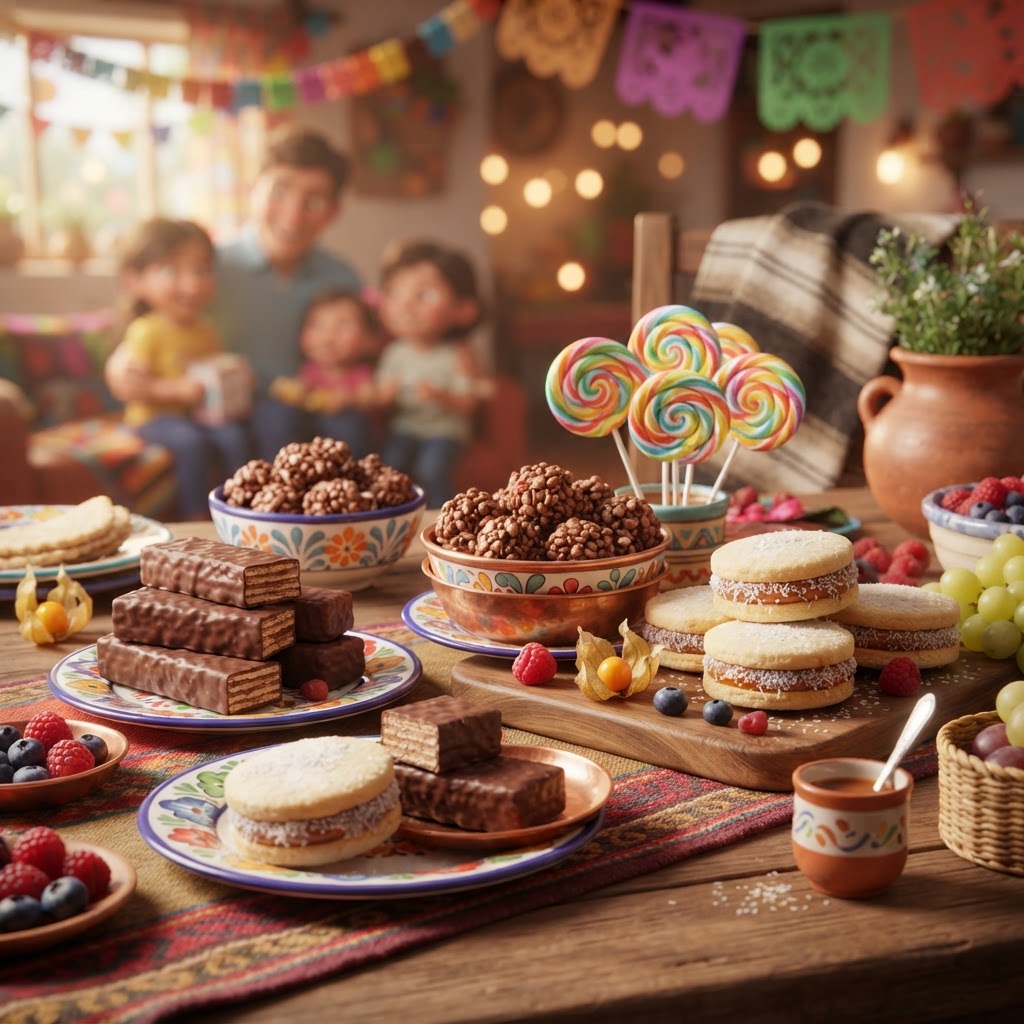
Sweet Treats & Candies
Chile has many famous treats. Super 8 is a crunchy wafer covered in chocolate. Chokita mixes puffed rice, caramel and chocolate. Coyac is a colorful lollipop, and manjar is a sweet caramel-like spread used in cakes and alfajores. These foods are tasty occasional treats, so enjoy a small portion and remember to brush your teeth!
Try this sentence: “I share an alfajor with my friend.”
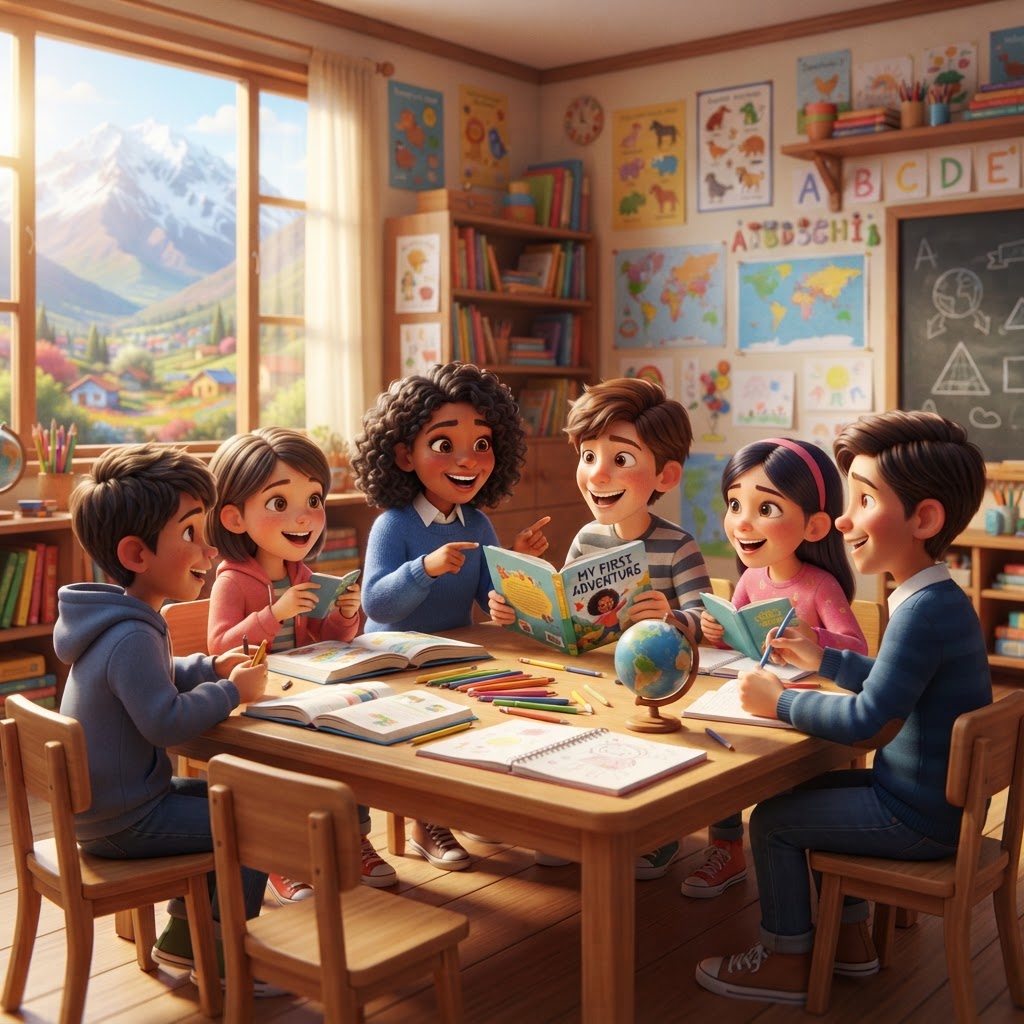
Books & Stories
Books can take you anywhere! Younger readers may enjoy Frog and Toad or The Bad Guys. Fans of funny illustrated stories can try Dog Man. Older readers may like Harry Potter and the Philosopher’s Stone or Chilean author Marcela Paz’s classic stories about Papelucho. You can read a familiar story in English and Spanish to compare words.
Try this sentence: “The hero finds a secret door.”

Music & Dance
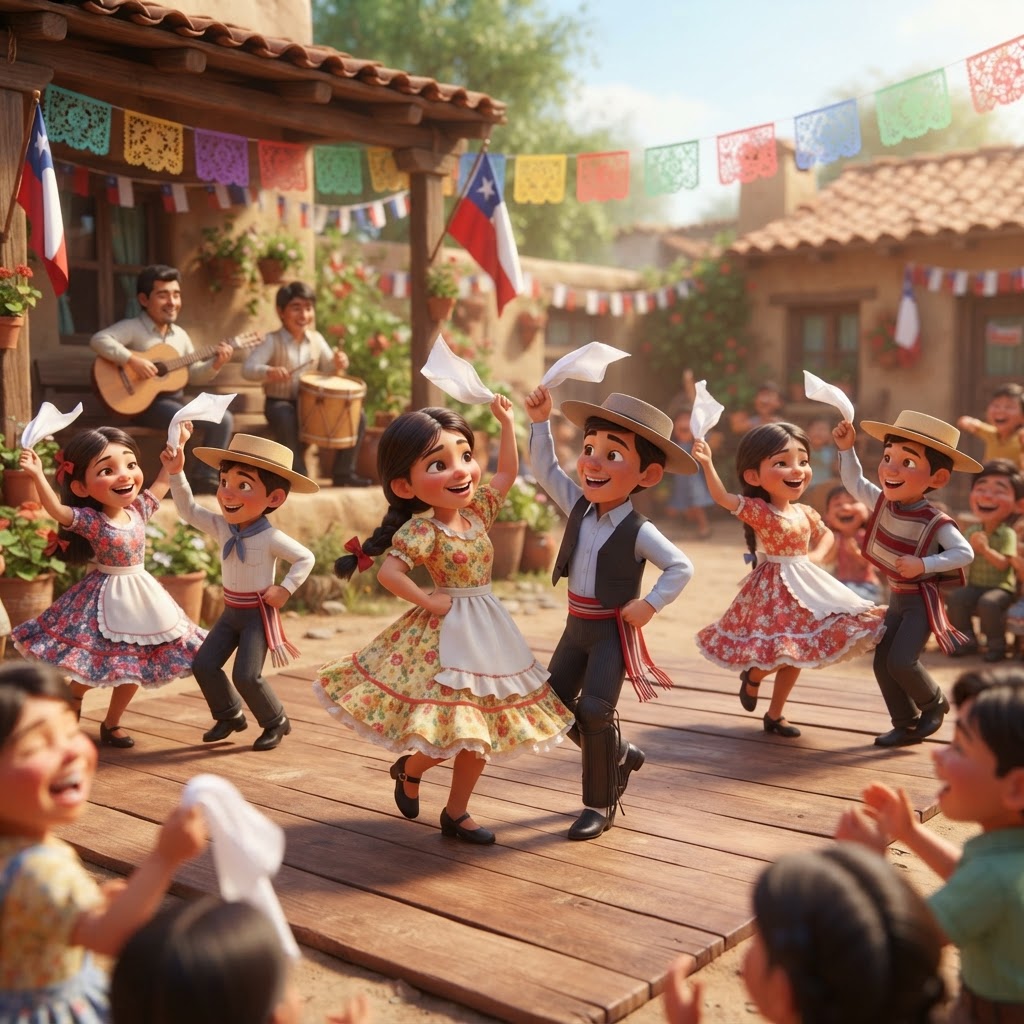
Children in Chile hear pop, Latin pop, movie songs and K-pop. Bright, family-friendly songs are fun for singing and dancing. You can also explore Chile’s national dance, the cueca, especially during the September celebrations. Dancers wave handkerchiefs and move to a lively rhythm.
Choose age-appropriate songs, learn the chorus and listen for English words such as dance, friend and happy.
Hobbies & After-School Fun
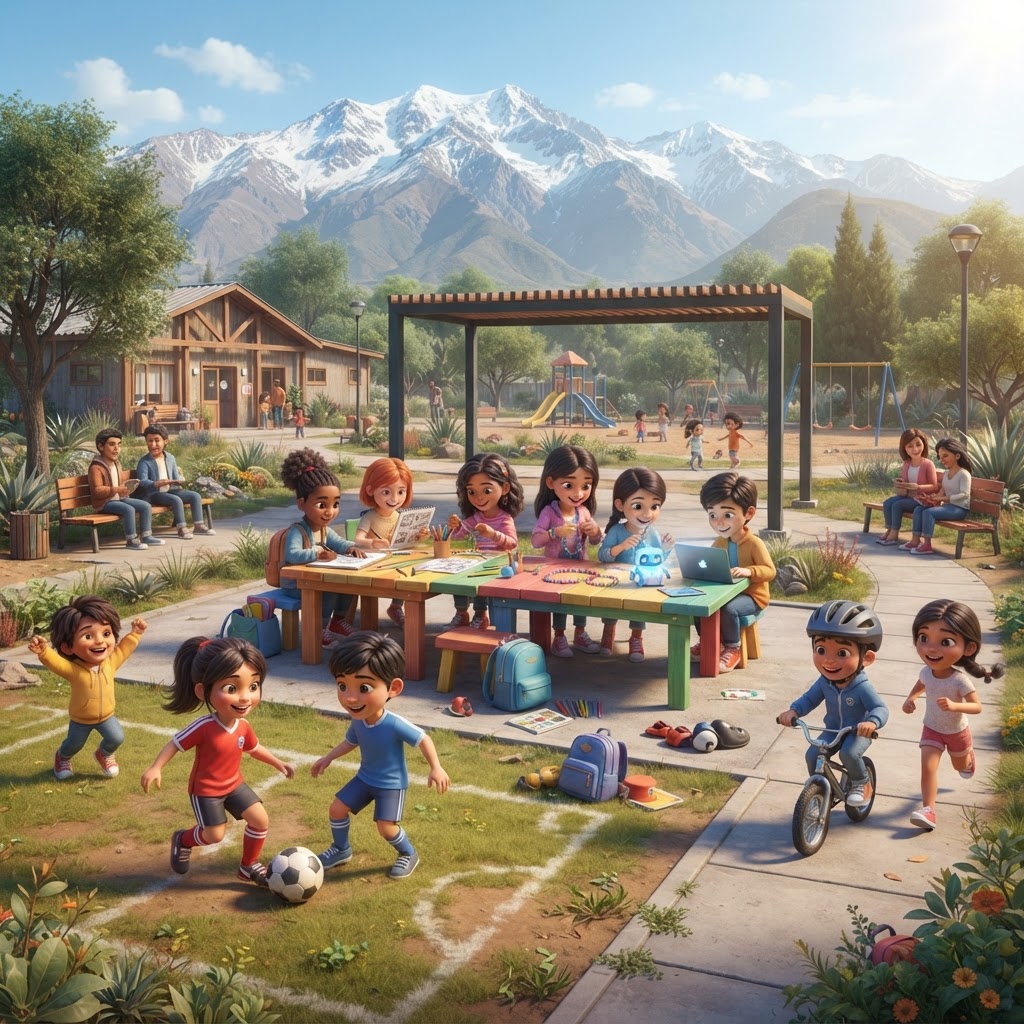
Football is very popular in Chile, but there are many other fun choices. Children can play basketball, ride a bicycle, skate, swim, draw comics, make bracelets or learn coding. On a rainy day, try origami or a family board game. On a sunny day, play outdoors with adult supervision and use sun protection.
Try this sentence: “After school, I practise football with my team.”
School Subjects Vocabulary
Use these useful words when you talk about your school day:
- Mathematics — Matemáticas: “We solve a puzzle in mathematics.”
- Science — Ciencias: “In science, we learn about plants.”
- History — Historia: “History teaches us about the past.”
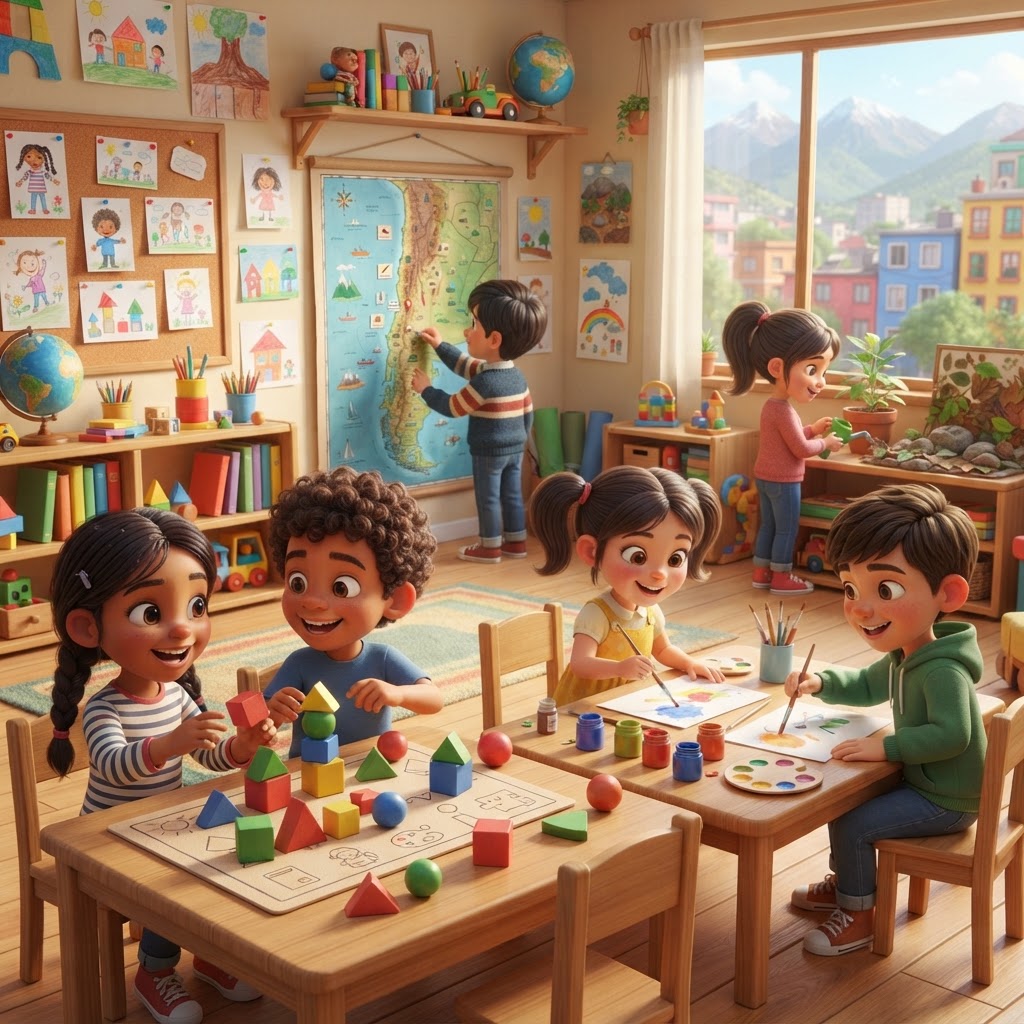
- Geography — Geografía: “We find Chile on the map in geography.”
- Art — Artes: “I paint a bright picture in art.”
- Physical Education — Educación Física: “We run and stretch in physical education.”
- English — Inglés: “I learn five new words in English.”
- Notebook — Cuaderno: “My notebook is in my backpack.”
Grammar Power-Up
1. Present Simple
Explicación: Usamos el presente simple para hablar de rutinas, gustos y hechos. Con he, she o it, normalmente agregamos -s al verbo.
English: “I read after school.” / “She reads after school.”
Español: “Yo leo después de clases.” / “Ella lee después de clases.”
2. Can and Can’t
Explicación: Usamos can para expresar habilidad y can’t para decir que alguien no puede hacer algo. Después de ambas formas usamos el verbo sin cambios.
English: “I can dance, but I can’t fly.”
Español: “Puedo bailar, pero no puedo volar.”
Quick Quiz
Which Chilean dance uses handkerchiefs?
A. Cueca B. Ballet C. Tap
What do children learn about in science in today’s example?
A. Plants B. Castles C. Trains
Which sentence talks about an ability?
A. I can dance. B. I keep a collection. C. The book is blue.
Great work! Check your answers below, then say one new English sentence aloud.
Show answers
1. A — Cueca. 2. A — Plants. 3. A — “I can dance.”